|
April 12
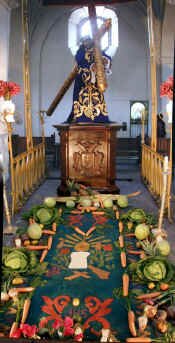
We arrived in Guatemala City late last night. Fortunately our bags came off the plane quickly so we were out of the airport and onto our shuttle to Antigua within half an hour. Juan Carlos, the shuttle driver, introduced us quickly to driving in Guatemala: the faster you drive, the faster you arrive! We arrived safely however and soon settled in at Posada Landivar. This morning we began to get acquainted with Antigua by searching out the necessities like banks and internet cafes. We then started wandering and visiting some of the churches where velaciones and procesiones would be taking place.
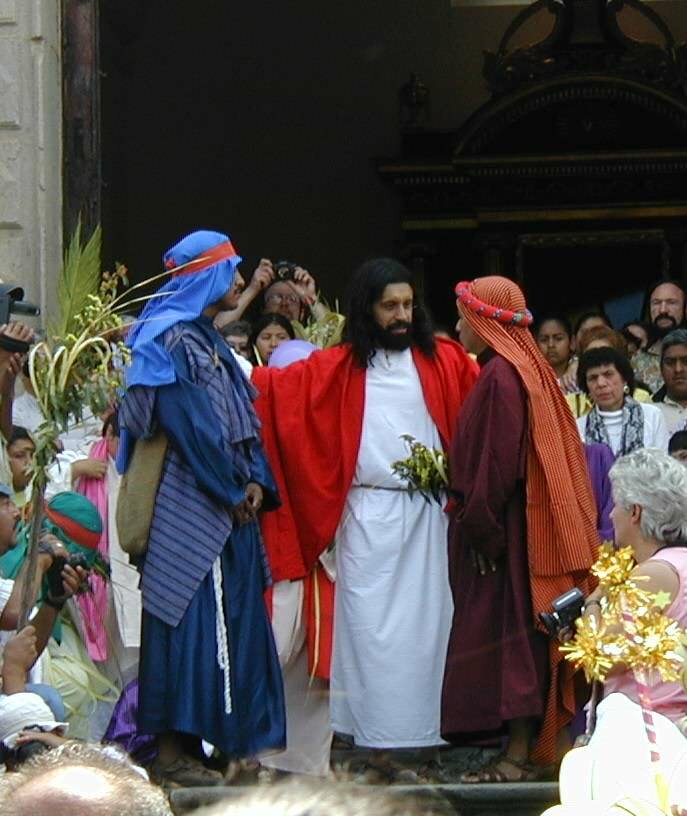
After leaving San Francisco we wandered until we came upon Iglesia y Convento de Nuestra Senora de la Merced - Antigua's most stunning colonial church. Begun in 1548, the church has been reconstructed several times due to earthquake damage. Today it appeared that a wedding was about to take place so we were unable to go inside. Today we rose early as Palm Sunday is a big day in Antigua. We started with a walk through town to Iglesia Escuela de Cristo. Along the way we passed many people carrying bouquets of palm fronds and flowers in commemoration of Palm Sunday. We were going to La Escuela to view a procession. When we arrived however, a service was being held in the church so we sat down to wait. We were soon joined by a dozen other travelers, all waiting patiently. Soon the service ended and people filed out of the church. And left. The travelers all looked at each other so I went inside and asked in halting Spanish about the procession. In my attempt to understand the response I caught "streets" and "park".
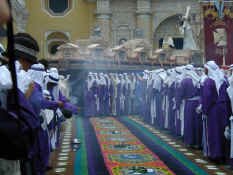
Then it was on to La Merced for one of the most impressive and elaborate processions of Semana Santa. On our way to the church we passed a number of alfombras in various stages of completion. Everyone helps, even the children. As we got closer to the church, the alfombras reached their peak and so did the crowds. Arriving minutes before the start of the procession, we were none the less able to secure a prime spot at the end of the first carpet out of the church.
As the float left the church, it had to make an "S" turn onto the alfombra. This was a sight to behold. A manually carried, 40 ft. long float being moved in a swaying rhythm down a beautiful carpet. As they came closer, we realized we would have to move out of the way. However, as we started backing up, we reached a curb where other people were standing. Unable to move further, the huge float kept coming closer and needing room to make another turn. We pushed as far back as possible and this magnificent float passed just inches away. Talk about "in your face", this certainly was. Moving with the crowd after the float passed, we walked further down the route and watched it pass by again, this time followed by a float carried by only women. This float carries a statue of Santisima Virgen de Dolores. The float carriers change every block and the route covers a good portion of Antigua. The procession won't end until midnight back at La Merced.
Tomorrow we head up into the Highlands to visit the smaller communities where the Maya continue to follow their age-old lifestyle. We will be returning to Antigua to view more processions later in the week. Last night on our way to dinner, we came across several more alfombras being constructed. Because the procession lasts until midnight, people at the end of the route have to wait until later in the day to construct their carpets. But they also have to finish them before dark! These alfombras were some of the most beautiful of the day. Today we rented a car and headed for the highlands and specifically Lago de Atitlan. The roads are narrow, the hills steep and the bus drivers crazy, but it was a beautiful and interesting drive. We saw many Maya going about their daily routine dressed in their beautiful traje (traditional clothing). This included men with hoes cultivating their fields and men and women hauling huge bundles of wood on their backs for firewood or lena. We even saw several women sitting off the side of the road weaving with their back strap looms attached to a nearby tree. The traditional customs of the Maya are strongest in the Highlands. The towns and villages have been occupied, in some cases, for a thousand years.
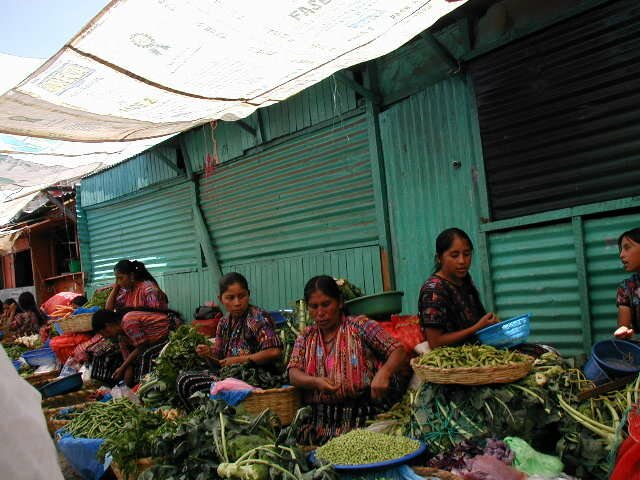
As we continued driving, it seemed every town we passed got smaller and smaller. And so did any road signs until there were none. It seemed as if the main road of each town turned off and we kept going straight until typically we ran out of road. Fortunately our rental car is small so we can turn around easily because we had to several times! We soon reached the "gringo" town of Panajachel. This town has been a favorite of travelers for decades. So much so that it has earned the local nickname of "Gringotenango" (place of the gringos.) Situated on the shore of Lake Atitlan, it is in a beautiful setting, but full of more non-Guatemalans than natives. Outside of town was a beautiful waterfall right next to the road. The views of the lake from this point on were spectacular even if the day was cloudy and hazy. Continuing around the lake we passed more small villages and many people walking along the roadway, many of them carrying heavy loads on their heads or their backs. Soon we turned off toward the town of Santiago Atitlan, home to the locally revered deity, Maximon. Arriving late in the day, we were able to get directions to the current residence of Maximon so we can visit tomorrow morning. We also found that the villagers from some of the surrounding villages had come into town to set up for tomorrow’s market. Market days are especially colorful and exciting as the towns are filled to capacity with Maya in traditional clothing selling just about anything. Be sure to check out the photo pages for all the additional photos. Go to the next Journal Page. |